Permanent Record, Permanent Error: When LCSH Mistakes Outlive Their Corrections
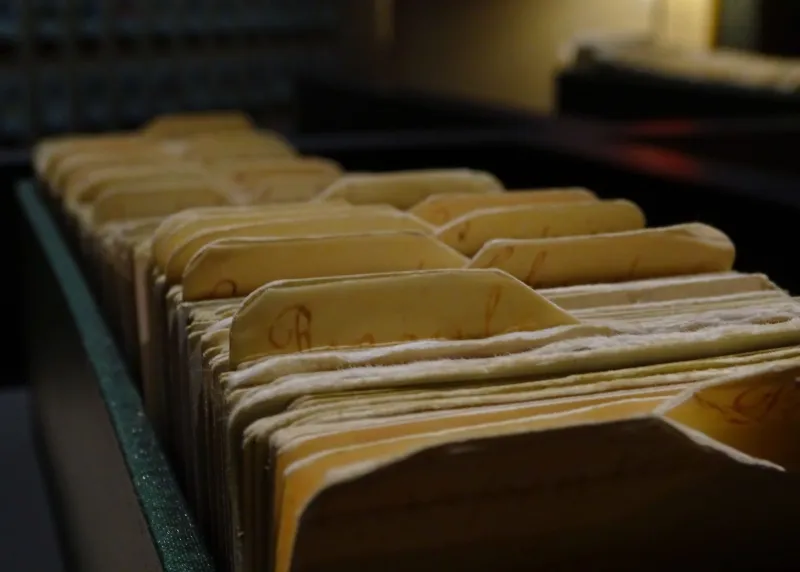
Library catalogs are not neutral mirrors. They are constructed environments, shaped by deliberate choices about language, hierarchy, and the boundaries of human knowledge. Most of the time, those choices are made carefully. But occasionally, a mistake enters the system—a transposed letter, a misapplied scope note, a heading assigned to the wrong conceptual territory—and the machinery of standardization does what it was built to do: it replicates that mistake across the entire network.
The Library of Congress Subject Headings system was designed, in part, to prevent exactly this kind of cascading failure. Authority control exists precisely so that one authoritative form of a heading governs all others. In theory, a correction made at the source should ripple outward just as efficiently as the original record did. In practice, the history of LCSH is dotted with cases that complicate this reassuring picture considerably.
How Errors Enter the System
The pathways through which mistakes find their way into LCSH authority records are more varied than many catalogers appreciate. Some errors are typographical—the kind that slip past even careful proofreaders when a heading is first established. Others are conceptual, arising from a cataloger's reasonable but ultimately incorrect interpretation of a subject's scope at the moment of original description. Still others emerge from the inherent instability of language itself: a term that accurately described a phenomenon in 1952 may carry entirely different connotations, or point to an entirely different body of literature, by the time a researcher encounters it in 2024.
What makes these errors particularly consequential is the moment at which they enter the record. A heading established early in LCSH's history—particularly one that gained wide adoption before digital catalogs made cross-system comparison feasible—could accumulate years of use before any inconsistency was formally identified. By that point, the heading had already been applied to thousands of bibliographic records distributed across hundreds of institutions.
The Replication Problem
The mechanics of catalog record distribution amplify the problem in ways that the original architects of centralized cataloging could not fully have anticipated. When the Library of Congress creates an authority record, that record becomes the foundation upon which member institutions build their local catalogs. Under cooperative cataloging arrangements such as those facilitated through OCLC's WorldCat, a single bibliographic record—complete with any errors in its subject heading string—can be copied by dozens or hundreds of libraries before a problem is detected.
This is not a flaw in the cooperative model; the efficiencies it provides are real and substantial. But it does mean that the network's greatest strength—rapid, wide distribution of shared cataloging work—functions with equal effectiveness whether the record being distributed is correct or not.
Consider what happens when a heading is established with an incorrect spelling that nonetheless passes initial review. Libraries that accept the record as-is will apply the erroneous heading to their local holdings. Users searching under the correct spelling will find nothing. Users who happen to enter the misspelled form will find resources, but may have no reason to suspect they are operating within a corrupted index. The error is, in a meaningful sense, invisible to everyone except the cataloger who knows precisely what to look for.
When the Correction Arrives Late
The Library of Congress does issue corrections to authority records, and the process for propagating those corrections through the catalog network has improved substantially over the past two decades. Automated authority control systems can now flag records containing superseded headings and, in some cases, update them without human intervention. This represents genuine progress.
The difficulty is that "eventual correction" is not the same as "complete correction." Libraries that have not synchronized their local authority files recently may continue to carry the old heading indefinitely. Smaller institutions with limited technical infrastructure may lack the staff or systems to implement batch updates at all. And records that were exported, printed, or otherwise removed from a live catalog environment before the correction was issued may never be updated.
There is also the question of user behavior. A researcher who encountered a subject heading in 2005, wrote it into a dissertation bibliography, and subsequently used that heading to guide future searches has internalized the error in a way that no authority file update can reach. The misinformation has passed beyond the catalog's jurisdiction entirely.
Institutional Memory as Institutional Inertia
Librarians have a phrase for the kind of knowledge that lives in the practices of an institution rather than in any written document: institutional memory. It is, in most contexts, a resource to be cultivated. The experienced cataloger who knows why a particular local heading was established, or which vendor's records tend to require additional quality review, carries knowledge that makes the whole operation function more smoothly.
But institutional memory has a shadow. When the knowledge being preserved is incorrect—when the practice being perpetuated is built on a flawed foundation—the same mechanisms that transmit useful expertise also transmit error. A cataloger who was trained using a heading that has since been corrected may continue applying the old form out of habit. A policy document drafted before the correction was issued may remain in circulation long after it has been superseded.
The LCSH system's authority control apparatus is designed to override exactly this kind of drift. The whole point of maintaining a single authoritative form is to ensure that local variation and accumulated habit cannot permanently diverge from the standard. But the system can only correct what it can reach, and institutional memory, by its nature, exists in places that no authority file update can access directly.
What Librarians Have Learned
The cataloging profession has not been passive in the face of these challenges. Several practices have emerged from hard experience with LCSH error propagation that are worth examining here.
First, the importance of early detection cannot be overstated. The longer an erroneous heading circulates before correction, the more deeply embedded it becomes. Many institutions have implemented routine quality review processes specifically designed to catch newly established headings that may contain errors before those headings are applied to large numbers of records.
Second, the cooperative cataloging community has developed more robust mechanisms for flagging potential errors and routing them back to the Library of Congress for review. The Subject Authority Cooperative Program (SACO), through which libraries can propose new or revised headings, also provides a channel for reporting problems in existing authority records.
Third, and perhaps most importantly, the profession has developed a more nuanced understanding of what "correction" actually means in a distributed catalog environment. Issuing a revised authority record is the beginning of a correction, not the end of one. Full remediation requires active outreach to member institutions, clear communication about the scope of affected records, and ongoing monitoring to verify that the update has been implemented.
The Broader Lesson
The story of how LCSH errors persist is, at its core, a story about the relationship between standards and the systems that implement them. A standard is only as reliable as its implementation, and implementation is always a human process, subject to all the limitations that implies.
This does not mean that authority control is a failed experiment. The alternative—uncontrolled variation in subject description across thousands of independent catalogs—would produce far more serious and far less correctable problems. But it does mean that the confidence with which librarians and researchers often approach LCSH-controlled catalogs should be tempered by an awareness of how the system can fail.
The catalog, however carefully maintained, is not a perfect record. It is a historical artifact, shaped by the knowledge, assumptions, and occasional errors of the people who built it. Understanding that history is part of understanding how to use the catalog well.


