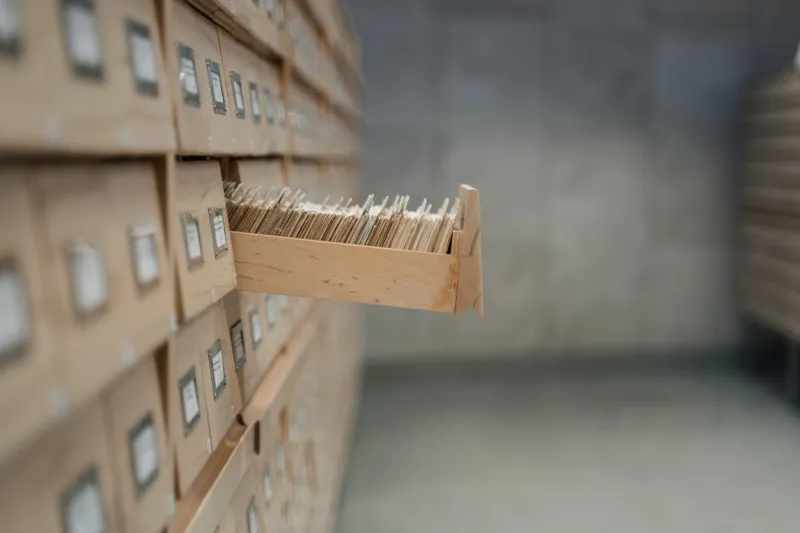
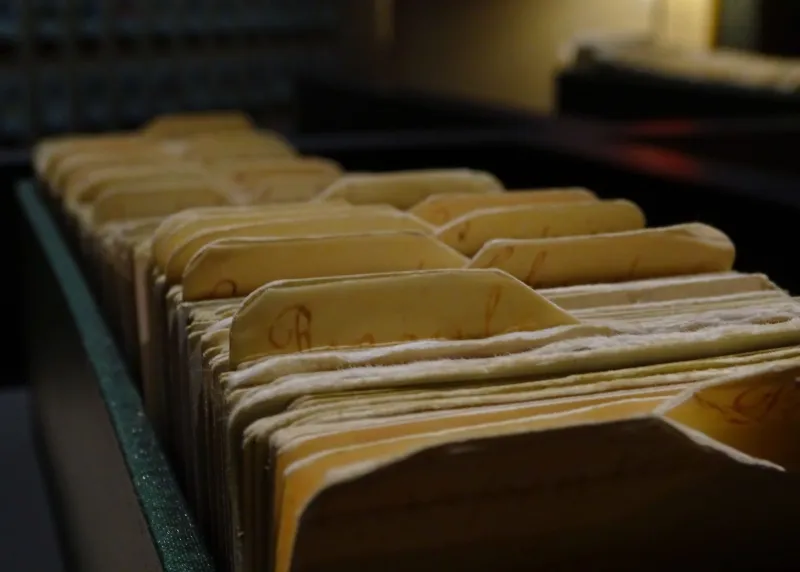
After the Last Checkout: The Lifecycle of a Deprecated LCSH Heading and the Records It Leaves Behind

In the architecture of library cataloging, few events are as deceptively quiet as the retirement of a subject heading. No announcement echoes through reading rooms. No patron receives a notification. Yet when the Library of Congress formally deprecates a term from its Subject Headings vocabulary, the ripple effects extend outward through hundreds of American library systems, touching millions of catalog records that may not be corrected for years — or, in some cases, ever.
Understanding what deprecation actually means in practice requires looking beyond the official documentation and into the day-to-day realities of cataloging departments that are, almost universally, under-resourced and overextended.
What Deprecation Actually Means in the LCSH Framework
The Library of Congress Subject Headings vocabulary is a living document, maintained through an ongoing editorial process managed by the Policy and Standards Division at the Library of Congress. When a heading is determined to be outdated — whether because the terminology has become offensive, the concept has been superseded, or the intellectual structure of the heading proves logically inconsistent — it enters a formal review process before being officially retired.
Deprecation in LCSH does not mean erasure. A retired heading is not deleted from the authority file; rather, it is marked as canceled or replaced, often with a reference pointing catalogers toward the preferred current term. The deprecated heading lingers in the authority record as a kind of ghost entry, technically present but no longer sanctioned for use in new cataloging.
This distinction matters enormously. Because the heading persists in the authority file, it continues to exist in the bibliographic records of every library that ever applied it. Unless those records are actively updated — a process known as global heading changes, or GHC — the deprecated term effectively continues to function as a live access point in local catalogs.
The Bureaucratic Timeline: From Review to Retirement
The path from identifying a problematic heading to formally retiring it is rarely swift. The process typically begins with a proposal, submitted either internally by LC staff or externally by a cataloging institution, often through the Subject Authority Cooperative Program (SACO). That proposal moves through a review cycle that can span many months, involving consultation with subject specialists, reference to external communities of practice, and coordination with the broader cataloging community.
Consider the trajectory of headings related to disability identity — a category that has received sustained critical scrutiny over the past two decades. Terms that medical and social science literature abandoned in the 1990s sometimes persisted in LCSH well into the 2000s, with formal deprecation and replacement lagging significantly behind shifts in both professional consensus and everyday usage. The delay is not a matter of indifference; it reflects the genuine complexity of coordinating changes across a vocabulary that underpins millions of records in thousands of institutions.
Once a heading is officially retired, the Library of Congress updates its own catalog through automated global heading changes. For member institutions of the Program for Cooperative Cataloging, authority record updates flow through systems like the MARC Distribution Service. But the translation of those updates into local catalog databases is not automatic — it depends on each institution's technical infrastructure, staffing capacity, and cataloging priorities.
The Local Catalog Problem: Who Actually Does the Work?
This is where theory and practice diverge most sharply. A mid-sized academic library in the United States might hold tens of thousands of bibliographic records carrying a single deprecated heading. Correcting those records requires either a robust automated process — which demands significant technical expertise and systems support — or manual review, which is simply not feasible at scale for most institutions.
Catalogers at public and academic libraries describe a situation that is, in many cases, one of managed imperfection. A cataloging librarian at a regional university library in the Midwest, speaking in general terms about the challenge, noted that global heading changes represent only the most straightforward scenario. When a deprecated heading is replaced not by a single successor term but by multiple more specific headings — a common outcome when LCSH moves toward greater granularity — the automated replacement process breaks down entirely. Human judgment is required to determine which new heading, or combination of headings, best represents the intellectual content of each affected record.
The practical result is a catalog that contains, at any given moment, a mixture of current and outdated terminology. Researchers using keyword searches may encounter deprecated terms as active access points, potentially skewing their understanding of how the literature is organized or leading them to conclude that a subject is less well-represented in the collection than it actually is.
Case Studies in Deprecation: Terms That Outlived Their Welcome
A few concrete examples illustrate the breadth of the challenge. The heading Cookery, long the established LCSH term for what most English speakers would call cooking or culinary arts, was replaced by Cooking after sustained criticism that the older term felt archaic and created unnecessary barriers for catalog users searching in natural language. The transition required updating an enormous volume of records across American libraries — a process that proceeded at very different rates depending on institutional resources.
In a different register, headings related to Indigenous peoples of the Americas have undergone significant revision over several decades, moving away from terminology that Indigenous communities and scholars identified as inaccurate or demeaning. Each revision created a new generation of legacy records carrying the superseded terms. Some of those records have been corrected; many have not. The result is a patchwork catalog landscape in which a researcher's experience depends heavily on which library system they happen to be searching.
The heading Electronic data processing — once the standard LCSH term for what the broader world now calls computing or information technology — was gradually superseded as the field evolved, leaving behind a substantial corpus of records that, in some catalogs, still surface under the older terminology.
The Case for Systematic Investment
The persistence of deprecated headings is not primarily a failure of will on the part of cataloging professionals. It is a structural consequence of the gap between the pace at which LCSH evolves and the resources available to libraries for retrospective record maintenance. Global heading changes are technically possible for well-resourced institutions with modern integrated library systems; for smaller libraries operating on constrained budgets with aging infrastructure, the backlog is simply a fact of institutional life.
Several library associations and cataloging working groups have called for more robust investment in retrospective cataloging, arguing that the integrity of the catalog as a research tool depends on the consistency of its vocabulary over time. The emergence of linked data frameworks — which hold out the promise of more dynamic vocabulary management — may eventually change the equation. But linked data implementation remains uneven across American libraries, and the transition is measured in decades, not years.
In the meantime, the keyword graveyard grows. Deprecated headings accumulate in legacy records, quietly shaping — and sometimes distorting — the research experience of students, scholars, and practitioners who have every reason to assume that the catalog reflects current understanding. Recognizing the gap between that assumption and the reality of catalog maintenance is a necessary first step toward addressing it.