Renaming the Record: How LCSH Terminology Revisions Reshape Library Catalogs and Scholarly Discourse

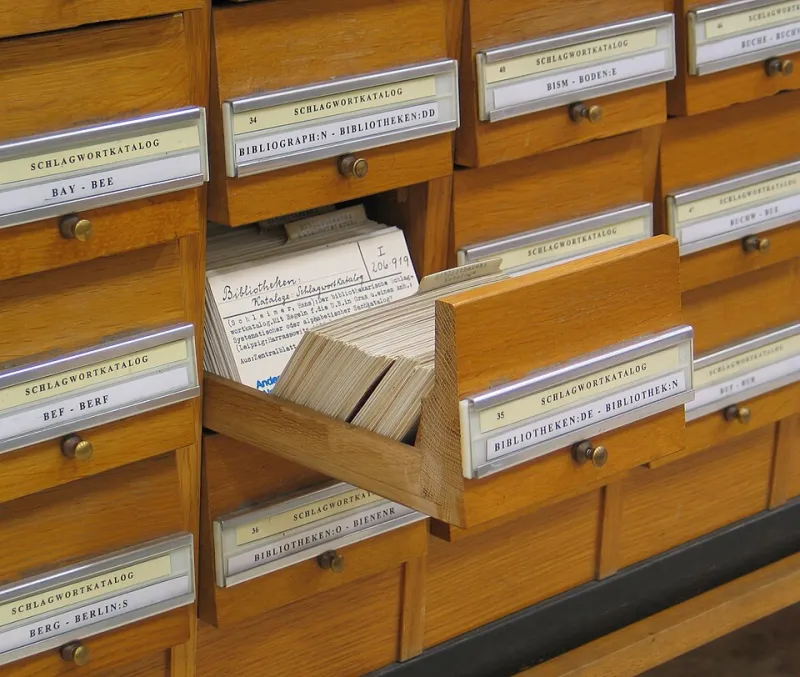
Photo: Marie-Lan Nguyen, CC BY 2.0 fr, via Wikimedia Commons
Library of Congress Subject Headings carry more authority than most researchers realize. When a cataloger assigns a subject heading to a monograph, a periodical, or an archival collection, that decision shapes every future search that might retrieve it. For decades, however, certain headings embedded in the catalog reflected the cultural assumptions and linguistic conventions of earlier eras—assumptions that scholarship has since moved well beyond. The story of how those terms get revised, retired, or replaced is one of the most instructive chapters in modern cataloging history.
The Long Life of 'Oriental'
Few revisions in recent LCSH history have attracted as much professional attention as the gradual retirement of the term Oriental as a geographic and ethnic descriptor. The heading appeared in dozens of compound subject strings—Oriental languages, Oriental philosophy, Oriental rugs—and was used broadly to describe peoples, cultures, and scholarly disciplines associated with Asia. By the early 2000s, the term had already been widely criticized in academic circles as a relic of nineteenth-century European imperialism, most famously through Edward Said's foundational 1978 work Orientalism. Yet subject headings move on a different timeline than academic publishing.
The Library of Congress began addressing this systematically, replacing constructions such as Oriental philology with geographically specific alternatives like East Asian philology or South Asian languages and literatures. This shift was not cosmetic. It required not only the creation of new authority records but also the establishment of see also references and scope notes to ensure that users searching under older terminology could still locate relevant materials. The practical challenge was enormous: thousands of bibliographic records across hundreds of institutions carried the deprecated terms, and not every library had the resources to perform retrospective recataloging at scale.
Case Study: The Transition in Academic Libraries
Consider a mid-sized research university library in the Midwest that had cataloged its East Asian studies collection using LCSH headings established in the 1960s and 1970s. When the Library of Congress updated its authority file, the institution faced a decision: invest staff time in updating legacy records, rely on automated batch processes, or accept a period of inconsistency in which both old and new headings coexisted in the public catalog. Many libraries chose the latter by necessity, creating what catalogers sometimes call a split file problem—where materials on the same subject are effectively siloed under different headings depending on when they were cataloged.
This is not merely an administrative inconvenience. A graduate student researching twentieth-century East Asian political philosophy might retrieve only a fraction of the relevant holdings if the catalog has not been fully updated, with older monographs still filed under superseded headings. The intellectual cost of incomplete transitions is real and disproportionately affects users who are not already familiar with the catalog's historical quirks.
Beyond Geography: Contested Terms Across Disciplines
The Oriental example is prominent, but it is far from isolated. The heading Illegal aliens, long used to describe undocumented immigrants, became a flashpoint in the early 2010s when a coalition of library students at Dartmouth College launched a campaign calling for its replacement with Undocumented immigrants. The Library of Congress initially declined to make the change, citing the heading's widespread use and the complexity of a large-scale revision. The debate continued for years, drawing in professional organizations including the American Library Association, before the heading was eventually revised to Noncitizen immigrants in 2021—a compromise that satisfied some stakeholders and frustrated others.
Similar tensions have surrounded headings related to Indigenous peoples, mental health, and LGBTQ+ communities. The heading Indians of North America, for instance, has been the subject of sustained criticism from Native American scholars and tribal librarians who argue that it imposes a colonial misnomer on diverse and sovereign peoples. The Library of Congress has made incremental adjustments, adding specific tribal nation headings and updating certain compound terms, but a comprehensive overhaul remains an ongoing project rather than a completed one.
The Mechanics of Change
Understanding why terminology revisions take as long as they do requires some familiarity with the governance structure behind LCSH. The Library of Congress's Policy and Standards Division oversees the authority file, but proposals for new or revised headings can originate from catalogers at any NACO-participating institution. The Subject Authority Cooperative Program (SACO) provides a formal channel for libraries to submit proposals, which are then reviewed by LC staff. This decentralized model is one of LCSH's great strengths—it distributes the labor of maintenance across the profession—but it also means that change is incremental and consensus-dependent.
Once a heading is officially revised, the updated authority record is distributed through the Library of Congress's Name Authority File and Subject Authority File, accessible via the LC Linked Data Service and through utilities such as OCLC Connexion. Institutions that catalog cooperatively through OCLC's WorldCat can benefit from global updates when the master bibliographic record is corrected, but local catalog records may still require manual intervention.
Balancing Historical Integrity and Current Practice
One of the more philosophically vexing questions in this area concerns historical accuracy. If a 1955 monograph was cataloged under a heading that was standard at the time, does updating that record constitute a form of anachronism—imposing contemporary values on a historical artifact? Most cataloging professionals today answer in the negative, arguing that the purpose of a subject heading is to facilitate discovery rather than to document the intellectual climate of the cataloging moment. The heading is an access point, not a historical statement.
That said, some archivists and special collections librarians take a more nuanced position, particularly when dealing with primary source materials where the original terminology is itself historically significant. In those contexts, scope notes and historical notes within the authority record become essential tools, allowing catalogers to acknowledge deprecated usage without perpetuating it as a live access point.
What Comes Next
The trajectory of LCSH revision suggests that terminology will continue to evolve as scholarly communities advocate for more precise, respectful, and culturally grounded language. The increasing participation of historically underrepresented communities in the cataloging profession—and in SACO proposal processes—is already producing more nuanced authority records in areas that were long neglected. Linked data frameworks, which allow subject headings to carry richer contextual metadata and to connect with external knowledge bases, may eventually make it easier to document the full history of a term's usage without forcing a binary choice between old and new.
For practicing catalogers and library administrators, the practical imperative is clear: periodic audits of legacy records, active engagement with SACO proposal processes, and investment in staff training on current LCSH policy are not optional maintenance tasks. They are fundamental to the catalog's core mission of equitable, accurate access.